Work management in the modern digital environment has evolved from a localized operational function into a strategic infrastructure capability. The complexity of cross-functional dependencies and distributed workflows has increased with the scale of organizations to the extent that it requires a system that does not have the constraints of traditional project management. Whereas project management focuses on individual initiatives with defined start and end points, work management establishes a continuous operational framework that integrates recurring operations, one-off initiatives, and long-term strategic programs into a unified execution model.
This development is imperative in case of technology-driven businesses. Recent industry estimates project the global workflow automation market to reach approximately $30 billion by 2030, reflecting sustained demand for operational transparency and automation-driven efficiency. Through adopting a robust work management architecture, CIOs and CTOs can prioritize workload toward value creation rather than reactive firefighting, while ensuring technical resources are aligned with high-priority business deliverables.
Core Components of Modern Work Management
There are five underlying pillars on which a robust work management system is constructed in order to eradicate friction in operations and achieve maximum output.
- Task Organization and Workflow Standardization
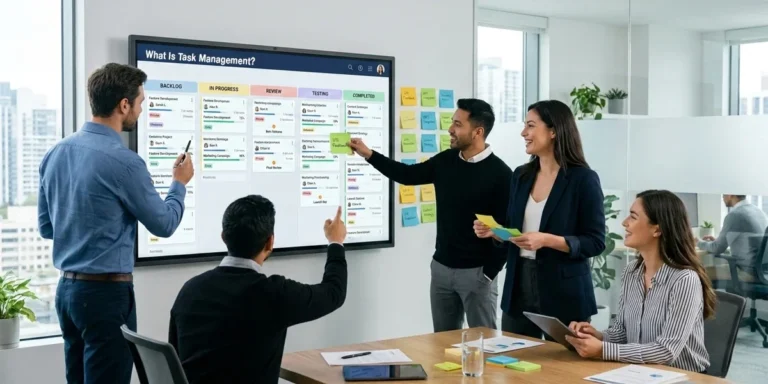
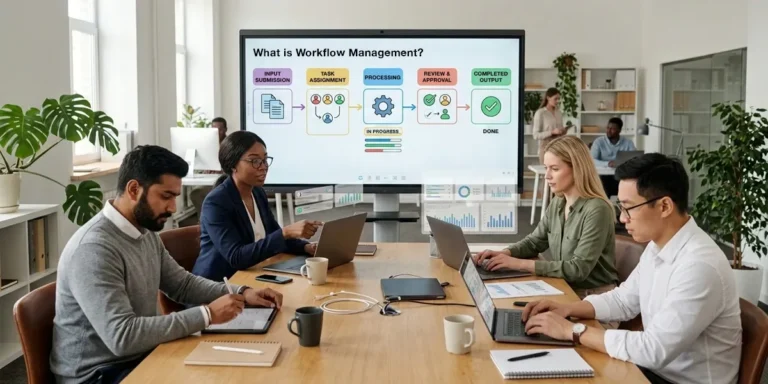
An effective orchestration requires a centralized logic layer that determines how work enters, flows through, and exits the organization. Standardization ensures that task intake and execution mechanisms remain consistent across departments, reducing cognitive load and minimizing coordination overhead across cross-functional teams.
- Resource Allocation and Capacity Planning
Modern systems make use of data-driven intelligence to balance the workload distribution. This will help avoid burnout and detect the so-called zombie projects that may consume the resources but do not provide a demonstrable ROI. Enterprise-grade work management provides real-time visibility into resource allocation, cost exposure, and availability across teams.
- Teamwork Structures and Performance Management
In addition to mere communication support, these frameworks embed contextual intelligence into each unit of work. Instead of using binary done/not done performance measures, performance tracking incorporates velocity, quality standards, and correspondence to Key Performance Indicators (KPIs).
Technology Enablement and AI Integration
The performance of work management is closely connected to the underlying technology stack. Integration with existing Enterprise Resource Planning (ERP), Customer Relationship Management (CRM), and DevOps environments is non-negotiable to maintain a single source of truth.
- AI-Based Workload Management: AI-driven agents have been added to help in predictive scheduling where the potential bottlenecks can be identified before they occur. Industry studies indicate that organizations applying AI in operations management report efficiency improvements of up to 40%, depending on implementation maturity.
- Smart Automation: Low-code and no-code platforms enable the automation of tedious administrative processes, including status reporting and data entry, to enable high-value engineering employees to work on product development.
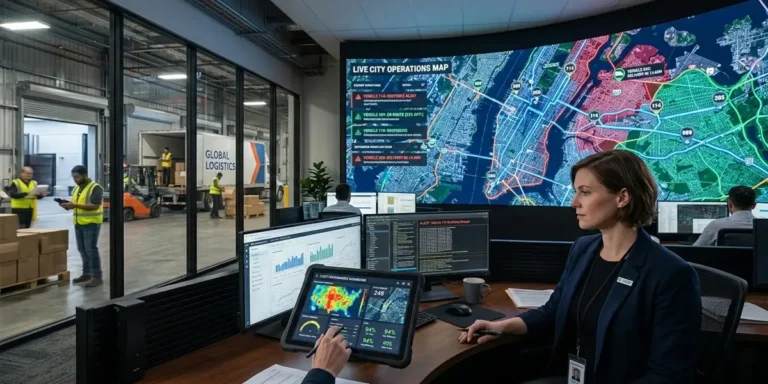
- Data Processing and Dashboards: The visualized work lifecycle facilitates real-time data processing and enables the leadership to make well-informed decisions based on empirical data other than anecdotal updates.
Implementation Strategy for Enterprises
The shift towards an integrated work management model cannot be effected in one step.
- Organizational Readiness Assessment: Audit the existing fragmented processes and reveal the dark work activities that are not recorded in tracked systems.
- Tool Selection Criteria: Choose one that is scalable, has an API that is robust and compliant to the security regulations (SOC2, GDPR). The tool should be able to accommodate the enterprise and not vice versa.
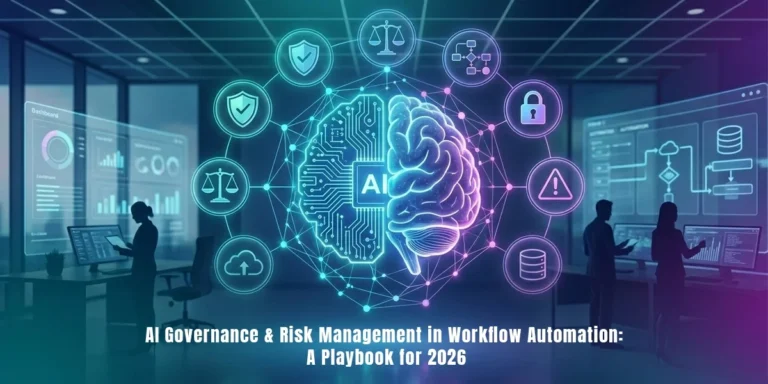
- Governance and Compliance: Have proper protocols that govern access to data and ownership of processes used to make the system compliant with the internal audit requirements.
- Change Management: Implementing change in the corporate culture where operations are siloed is to be achieved by executive sponsorship and a series of stepwise training programs.
Key Metrics and Performance Indicators
Successful work management is based on the measurable performance indicators:
- Throughput Rate: A number of tasks that have been done within the stipulated time.
- Resource Utilization: Percentage of productive capacity utilized.
- SLA Compliance: Adherence to defined service-level agreements and contractual obligations.
- Cycle Time Reduction: The duration between work initiation and completion.
- Efficiency in Operations: Cost and time reduction realised.
Research indicates that organizations implementing structured workflow automation experience productivity gains between 20% and 35%, depending on process maturity.
Challenges and Constraints
Regardless of the benefits, work management efforts may be hindered by a number of challenges:
- Workflow Silos: The departments that are used to autonomous and non-transparent operations will be resistant to change.
- Tool Overload: The increase in unnecessary SaaS applications that form data graveyards.
- Process Fragmentation: Attempting to overlay an integrated system onto poorly defined or fragmented manual processes without prior standardization.
To deal with them, a top-down requirement of operational transparency and a dedication to data integrity at all ranks in an organization are necessary.
The Future of Work Management
Predictive planning and real-time decision orchestration define the next phase of work management evolution. The discipline is moving toward systems that not only monitor execution but also recommend optimal execution pathways through predictive analytics and intelligent automation.
When such smart structures are implemented by enterprises, they will have a considerable competitive advantage. The approach to work management as a strategic asset and not an administrative liability means that organizations are able to reach a degree of operational excellence that enables them to scale efficiently in volatile and high-complexity market environments.
Conclusion
Work management has shifted from a project coordination function to a strategic infrastructure capability. It controls the discipline of executing, optimization of resources, assurance of compliance and transparency in the performance in the enterprise ecosystem.
Structured and technology-enabled work management will allow the leaders of digital transformation to predict scalability requirements, improve operational efficiency, and strengthen competitive positioning. Institutionalized work management systems that are facilitated by automation, AI, and governance methods enable organizations to gain stable control over complexity and place them into a stable position to grow an enterprise.
You Might Also Like