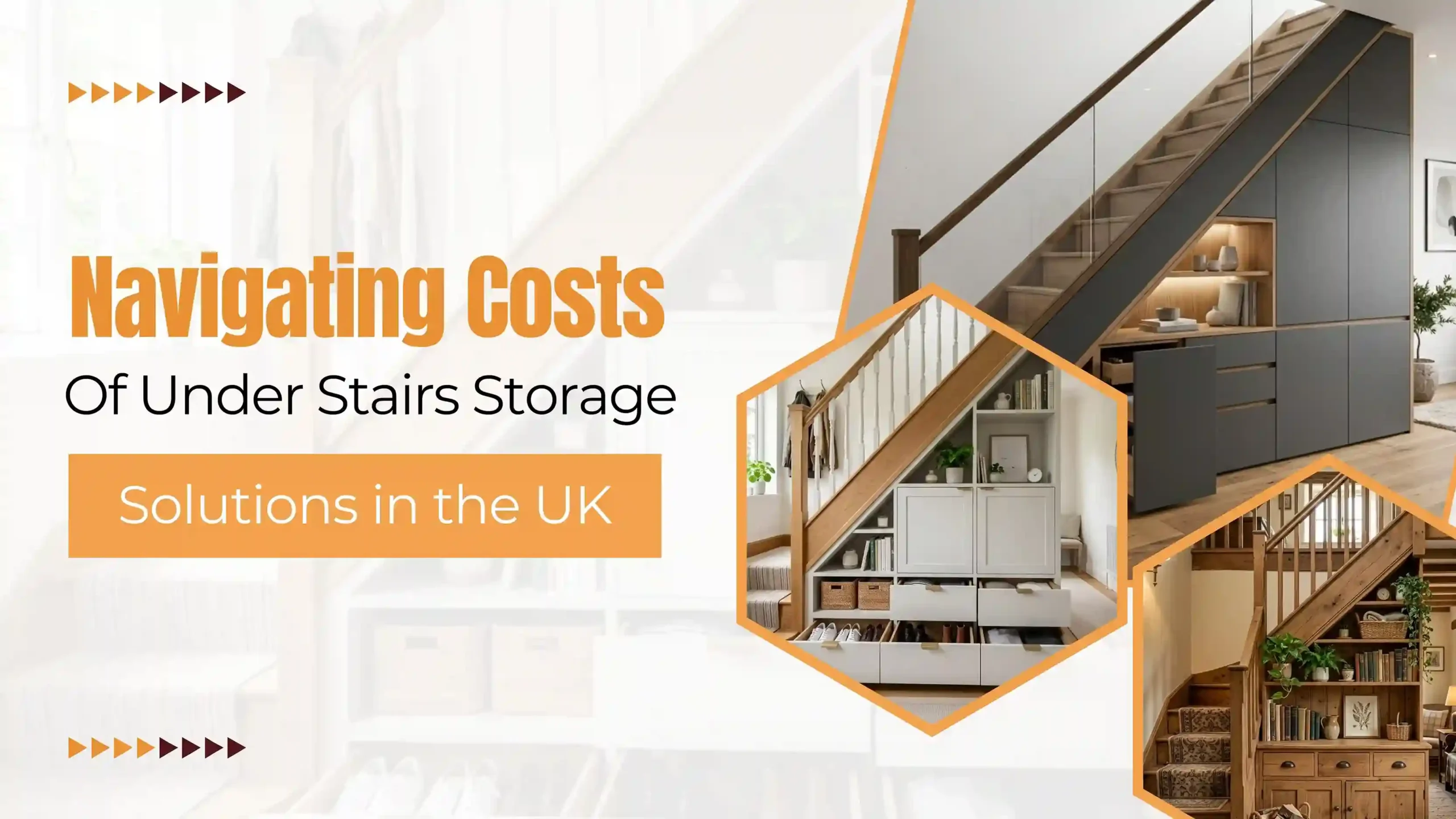
In the modern UK property market, spatial efficiency is directly proportional to the quality of lifestyle and the value of an asset, making the most of each square metre is of utmost importance. The unused space under the staircase is one of the best but least used spaces in the British home. Not only has the conversion of this clumsy geometry into useful space become a niche DIY- project, but it has also become an elegant architectural intervention. To both the homeowner and property developers alike, it is necessary to be aware of the underlying storage price as well as the technical variables that are utilized in the planning of the project.
For homeowners planning this type of renovation, a common question is: how much does under stairs storage cost in the UK, as prices vary depending on design, materials, and labour.
The Strategic Value of Understairs Storage
With the rising demand of smart space in city dwellings within the UK, there has been an increase in the demand for smart furniture. Storing items away under the stairs has ceased to be simply a way of stashing stuff out of sight; it is a tactical home enhancement that responds to the structural peculiarities of Victorian terraces, 1930s semis and even the current new-builds.
Beyond immediate organisational benefits, bespoke installations contribute to a property’s “kerb appeal” and internal valuation. High-quality, integrated storage solutions are frequently cited by estate agents as key selling points, offering a high return on investment (ROI) by resolving the perennial British issue of hallway congestion.
Primary Configurations and Design Variations
The nature of a solution that can be experienced in a property is dependent on the architectural limitations of a staircase. These installations are generally divided by the professionals into four major forms:
- Pull-Out Drawer Systems: This type is commonly considered the best system of accessibility, in which heavy-duty runners are employed to permit the full depth of the under-stair void to be used.
- Built-in Cupboards: An old system with the use of hinged doors. Although they are cost effective, they may lead to dead spots at the end of deep recesses.
- Open Shelving and Alcoves: This is commonly used with aesthetic displays or storing books, and in many cases, it is followed with the LED lighting to provide a high-end look.
- Integrated Utility Zones: High-tech converting areas, which can accommodate white goods, cloakrooms, or even custom-designed wine cellars, that need plumbing and electrical connections.
Key Factors Influencing Understairs Storage Cost
In deciding the extent of understairs storage cost, there are various technical and material issues that should be evaluated. One size fits all is hardly accurate because of the customized carpentry in the UK.
1. Design Complexity and Internal Configuration
A two door simple carcass is much less labour-intensive than a three or five pull-out drawer tiered system. The latter involves accuracy engineering so that the drawers do not run over the floor finish (thick-pile carpet or uneven tiles) and fit in the rake of the stairs perfectly.
2. Material Specification
- MDF (Medium Density Fibreboard): This is the construction standard of paint finishes. Storage in very humid locations at the external doors should be done using moisture-resistant (MR) MDF.
- Hardwood and Veneers: Oak, walnut or birch plywood is a better choice in terms of durability and aesthetic warmth, but at a very high premium price.
- Hardware: 15-20 percent of the total budget can be spent on the cost of soft-close runners, hidden hinges, and custom handles.
3. Technical Installation and Labour
The UK professional joinery is a trade. It may require scribing onto walls that are seldom perfectly plumb, especially the older British house stock. Such on site accommodation adds man-hours to a smooth fit.
Typical Price Ranges in the UK
Realistic estimates for how much does understairs storage cost reflect a broad spectrum based on design intent and finish quality:
- Basic fitted units: around £800 to £1,500.
- Standard bespoke installations with doors and drawers: typically £1,500 to £5,000.
- Highly customised or premium unit (luxury finishes, inbuilt lighting): above and beyond £5,000.
- Estimates issued by regional estimators based in UK towns and cities indicate that average values often fall in the range of £700–£1,000 to install standard features and not large customized features.
A clear distinction exists between professional installation and DIY under stairs storage projects as well: DIY, where feasible, can cost under £100, but requires considerable time and expertise.
Custom Carpentry vs. Modular Solutions
To those who are developing properties and the more discriminating house owners, the decision between custom carpentry and units is obvious. An under stairs storage solution is made to the precise millimetre of the staircase pitch. This gets rid of ugly spaces and profits the most.
Modular units are not as expensive but still tend to leave dead space on both ends of the slope at the top and bottom. Bespoke joinery is also an opportunity to incorporate old elements of an architecture, like skirting boards and dado rails, which would make the new piece appear to be a component of the house and not an addition.
Evaluating Structural and Functional Constraints
Prior to the employment of a professional, there are a number of practical issues to consider:
- Availability of Utilities: In most of the UK houses, the gas meter, electricity consumer unit or the stopcock is found beneath the stairs. Any construction should contain removable panels or certain points of access to meet the building standards and utility companies.
- Floor Levelling: In case the floor of the hallway is not even, the plinth system or adjustable feet have to be considered to avoid the misalignment of the drawers.
- Ventilation: In case it is used to store coats and/or shoes or to accommodate tumble drier, sufficient ventilation is needed to avoid accumulation of condensation and moulds.
Finding Reliable Installation Services
Due to the precision with which it needs to be done, most homeowners embark on their quest with a search of under stairs storage near me in order to locate local masters with particular experience of converting stairwells.
One can also recommend that a review of a past work portfolio with a specific emphasis on the area of work of scribing and finish quality take place. A local expert will also be conversant to the architectural peculiarities inherent to the type of housing common within that particular area of the UK.
Conclusion
Investing in under stairs storage is one of the most practical renovations a UK homeowner can undertake. While the initial understairs storage cost may seem significant compared to freestanding furniture, the long-term value provided by reclaimed square footage and enhanced property organisation is undeniable. By opting for bespoke joinery and high-quality materials, homeowners can ensure that this often-overlooked “triangular void” becomes a hallmark of efficient, modern design.
You Might Also Like