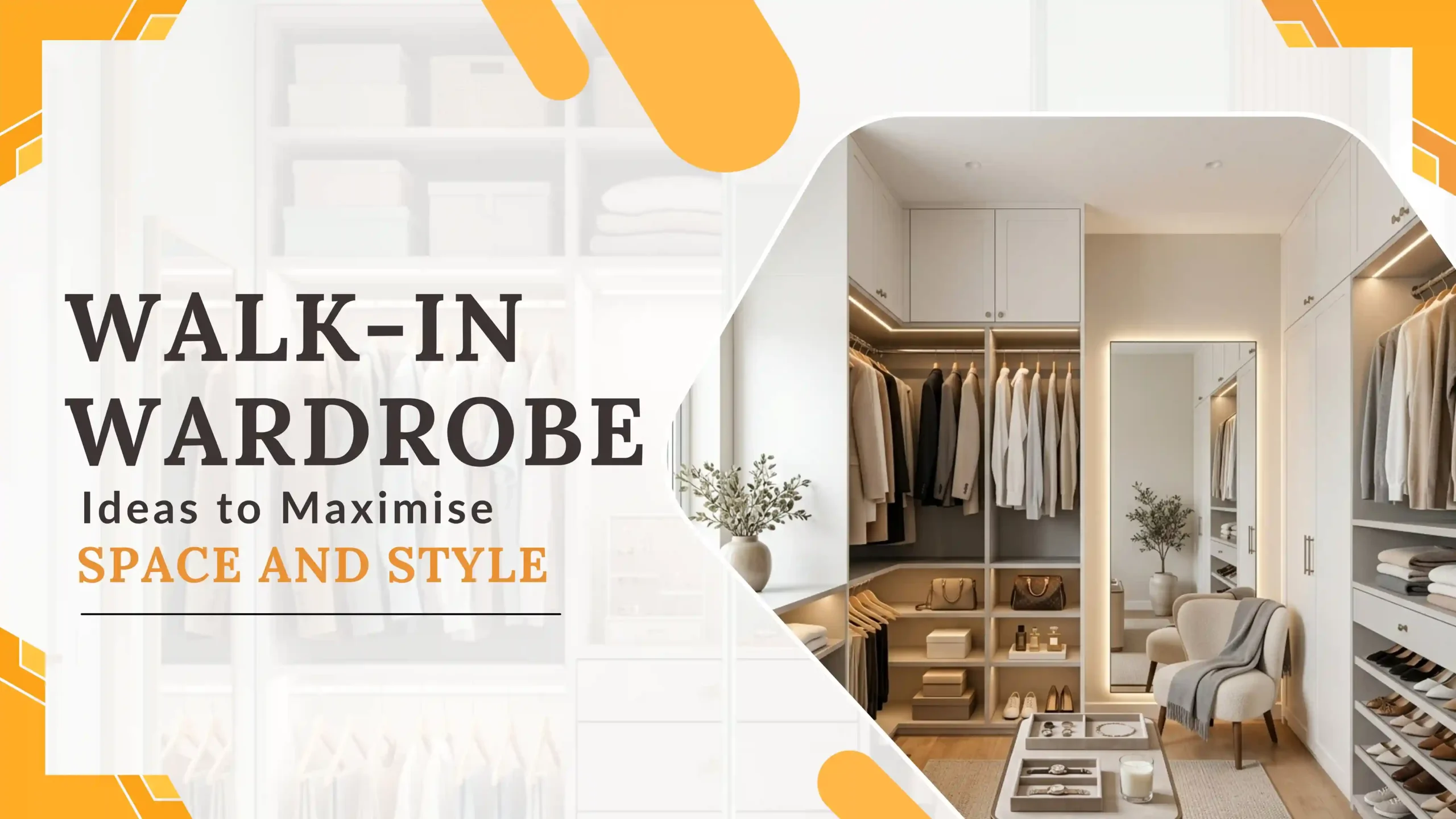
A well-designed walk-in wardrobe is no longer limited to larger homes. It is now an effective solution for better organisation, aesthetics, and space management. You have a small extra room or an entire dressing room, the right layout, storage, and finishes may result in a difference between functionality and appeal.
This guide explores a range of stylish and functional walk wardrobe ideas designed to maximise space, improve organisation, and enhance modern interiors.
This guide examines various classy and functional walk in wardrobe ideas and incorporates space optimisation with modern interior design principles. These approaches resonate with the art of bespoke furniture and smart interior design, which will stand the test of time and will be in fashion forever.
Understanding the Purpose of a Walk-In Wardrobe
The use of space should be planned before finalising the design of the walk in wardrobe. A walk-in wardrobe ought to be:
- A systematic place to store the clothing, shoes and accessories.
- An addition to the bedroom which is aesthetically incorporated.
- A dressing room that is easy to move around in.
The best concepts to be applied in walk in wardrobes start with having a clear knowledge of the daily routine, storage solution and the space at hand.
Layout Planning: The Foundation of Efficiency
The way a wardrobe works is decided by the layout. Even the most appealing designs cannot be made to work without proper spatial planning.
-
Maximum storage layout – U-shaped
Ideal for larger rooms, a U-shaped configuration utilises three walls for storage. This design maximises on space to hang, shelve and drawers although it has a central walkway.
-
L-shaped Planning of Small Areas
The L-shaped design will allow proper storage in the small rooms without congesting the room. It enables a balanced mix of shelving and hanging spaces.
-
Single-Wall Narrow Room Layout
One wall solution enables one to store with ease without consuming a lot of space in a very small area. This is coupled with mirrored panels which improve the illusion of space.
-
Island-Centred Design to appear luxurious
Large wardrobes have a central island to provide additional storage space where accessories are stored and a focal point. It is one of the most advanced walk wardrobe designs of luxurious interiors.
Smart Storage Solutions for Space Optimisation
Successful walk in wardrobe ideas can be achieved by effective storage. Tailor-made solutions make sure that all the inches are put into good use.
Adjustable Shelving
Personal shelving allows flexibility to adapt to the evolving storage needs. It is able to carry folded clothes and handbags.
Double Hanging Rails
Hanging rails Two-tier rails enhance the vertical storage space greatly and therefore, are best suited in shirts, jackets, and short garments.
Integrated Drawers
Small objects such as undergarments and accessories are concealed in the drawers by use of soft-close, which makes the drawers look clean.
Pull-Out Storage Features
It is easier to access and yet maintain order through the use of the pull out shoe racks, tie organisers and jewellery trays.
Vertical Storage
Use of full height cabinetry means that there is no wastage of space. High level storage can be used to store the seasonal items.
Lighting Design: Form Meets Ambiance
Lighting is a considerable consideration of usability and appearance. Darkness decreases functionality and proper lighting increases the whole experience.
Layered Lighting Approach
- Ambient lighting for overall brightness
- Task lighting for specific areas such as mirrors and drawers
- Accent lighting to highlight design features
LED Strip Lighting
Shelves and hanging areas have in-built LED lighting to provide visibility and high end finish.
Motion-Sensor Lighting
An add on practical and convenient addition that saves energy particularly in enclosed wardrobes.
Material and Finish Selection
The materials employed are also important in regards to durability and appeal. Premium walk in wardrobe designs are centred on the design and life cycle.
Wood Finishes
Natural wood finishes are comfortable and graceful and engineered finishes are uniform and tough.
Glass and Mirrors
Glass-fronted cabinets and mirrored panels increase the distribution of light, and the illusion of space.
Matte vs Gloss
- The matte finishes are elegant yet not brash.
- Gloss finishes are light reflective and have a modern look.
Balanced blend will ensure an elaborate and integrated design.
Colour Scheme for Visual Harmony
The colour selection should also be applicable to the overall interior design, and provide space perception.
Neutral Palettes
The warm palette of white, grey and beige creates a classic and relaxing atmosphere.
Dark colours to enhance depth
The dark wood, charcoal and navy finish provide contrast and luxurious touch.
Monochromatic Schemes
The harmonious and elegant effect of the ensemble of colours of a single colour is achieved.
Mirrors and Visual Enlargement
An essential aspect of good walk in wardrobe ideas is use of mirrors.
- Full length mirrors increase functionality.
- This is done in mirrors that reflect light and the little spaces appear larger.
- The brightness is enhanced by strategic placement without the use of extra lighting.
Seating and Dressing Areas
The aspect of seating contributes to the degree of ease and comfort.
Compact Seating
A small upholstered bench or stool can be fitted without taking up too much space.
Fixed Seating with Storage
In-built storage containers (dual-purpose furniture) on benches offer the extra storage space without disrupting the design.
Door and Access Considerations
Door selection has an effect on accessibility and space efficiency.
Open Wardrobe Concept
An open design boosts accessibility and gives a boutique look.
Sliding Doors
Sliding doors are slim-bodied and fit in small spaces but still portray a smooth appearance.
Glass Doors
Glass doors are either frosted or clear and are employed to have visibility and prevent dust that can destroy contents.
Personalisation: The Key to Bespoke Design
The optimal concepts of a walk wardrobe are personalized. The wardrobe is practical in the long term with personalisation.
Custom Compartments
Store the design based on some of the items such as suits, dresses or accessories.
Dedicated Zones
Sort the wardrobe into well-defined groups of clothing to enhance organisation.
Lifestyle Integration
Depending on the daily routines, dressing tables, mirrors or display areas can be taken into consideration.
Space-Saving Ideas for Smaller Homes
Space is a constraint to creativity. With careful planning, outputs that are quite functional can be obtained.
- Maximising floor space should be through the use of sliding or pocket doors.
- Choose a light colour palette to improve transparency.
- Make the room look bigger with mirrors.
- Concentrate on vertical, rather than horizontal growth.
The tiny walk in wardrobe designs are convenient and have no influence on style.
Maintaining Organisation and Longevity
An effective wardrobe should be useful in the long-term. Organisation and maintenance are required.
- Periodically clean and re-evaluate storage requirements.
- Store small objects with the help of organisers.
- Have a steady system of clothing classification.
- Make quality investments on fittings.
Conclusion
A walk-in wardrobe is not any storage place but a well-considered and stylish, as well as reasonable, one.
These ideas for walk in wardrobes work across both compact and spacious interiors, ensuring a balance of practicality and refined aesthetics.
The most efficient walk in wardrobe designs are those that combine functionality with high end designs, which optimizes on space usage as well as giving a high end visual effect.
Combining smart designs, customized shelves, sophisticated fabrics and considerate lighting, these walk in wardrobe concepts can make any room a highly practical and aesthetically sophisticated one.
The guidelines are universal regardless of the size of the area (small urban area) or the size of the interior (large): the principles are clarity, efficiency and permanence of the design.
You Might Also Like