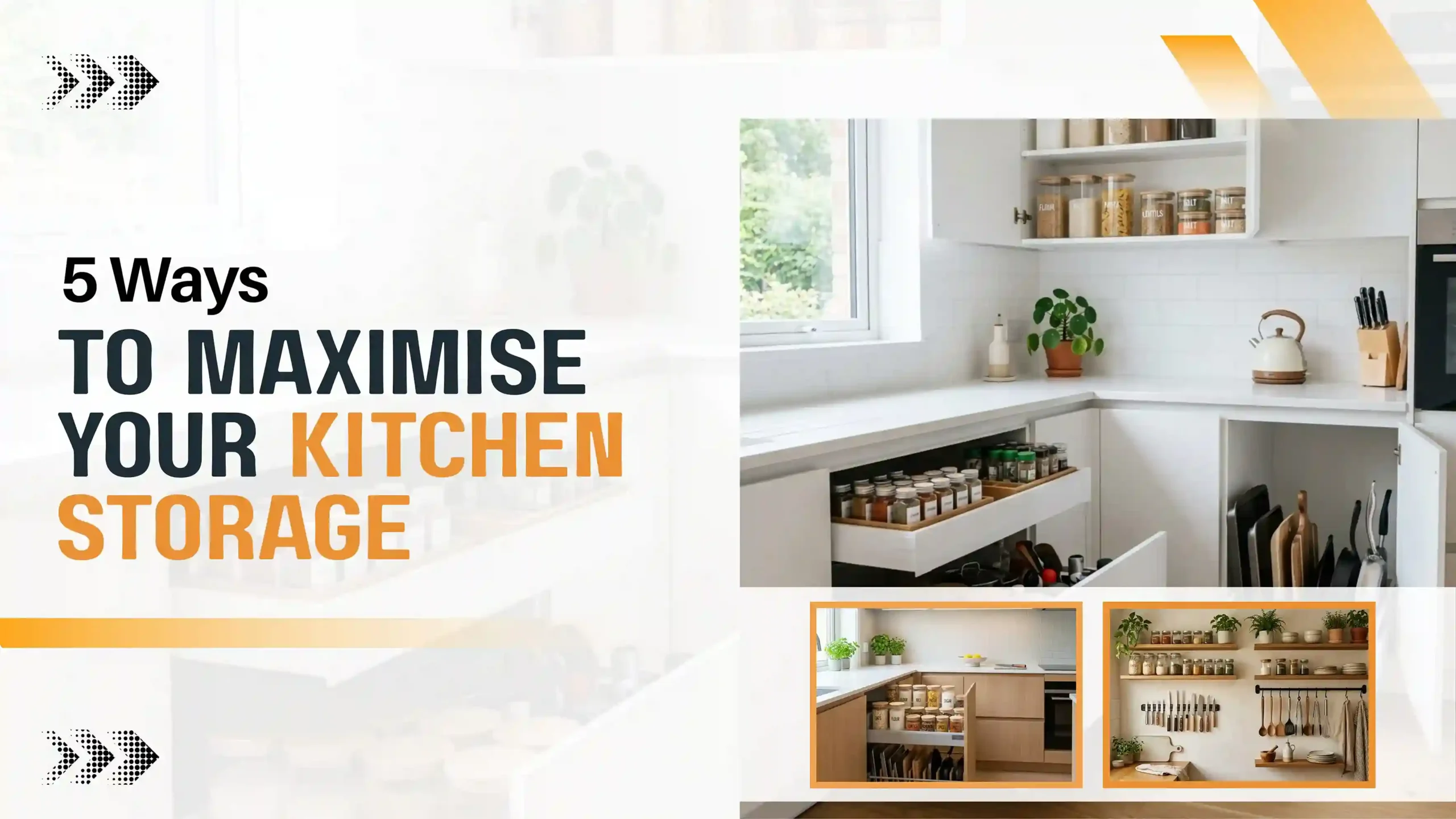
The need to have effective kitchen designs has never been more imperative in the modern UK housing market. Due to the rise in compact living spaces offered in urban homes and in modern flat developments, the kitchen is the most active room of the house and has to be more hardworking than ever before. The balance between aesthetic minimalism and high-density utility comes at the expense of traditional cabinetry and should instead be achieved through advanced, intelligent kitchen storage systems.
To both the homeowner and the design professional, the difficulty is to counter the architectural limitation of the standard British houses. A rigorous methodology of spatial engineering is required to maximise a footprint in terms of utilising every centimetre cubic of space to its best possible purpose. With the new technology of using progressive kitchen storage for small kitchens, it becomes possible to convert a small floor plan into an efficient cooking setup.
-
Precision Vertical Engineering: Full-Height Cabinetry
The most viable means of expansion when floor space is limited is vertical. Most of the traditional kitchen designs create a large space between the wall unit’s top and the ceiling; this space is unnecessary in a small space.
Full-Height Cabinetry
Kitchen storage in small kitchens is based on the specification of floor-to-ceiling cabinetry. Designers can move the items that are rarely used like seasonal glass or jars that are heavy, to the upper ceiling to give space to the prime real-estates at the waist and eye levels.
Systematic Wall Management
With the help of recessed shelves and custom-made overhead shelves, one can store the cookware without taking up the main workspace. Wall-mounted rail systems that are available to professional kitchen planners are sleek and are used to store utensils and spice matrices so that worktops can be kept clear to prepare food. This is a vertical orientation that is needed to ensure a clean and minimalistic look in small areas.
-
Advanced Integrated Cabinetry and Internal Hardware
The interior make-up of a cabinet is arguably more significant than the outward size. Standard fixed shelving often creates dead zones at the rear of deep cupboards, which are difficult to access and underutilised.
Pull-Out Larder Units
The storage of modern smart kitchen storage systems is dependent on the high level of internal hardware. Slimline pull-out larders which are usually less than 150mm wide may be installed where decorative pilasters would otherwise be placed. Such units make all the contents of the cupboard visible, and one does not need to dig deep shelves to find something.
Corner Optimisation
Corner voids have a bad reputation of not being efficient. Technical interventions include LeMans -type swivelling trays or high-tech carousel mechanisms that enable these cumbersome structural nodes to turn into extremely useful storage centres. They are designed to slide off, to allow an ergonomic access to the heavy pots and pans which would otherwise be pushed back in the dark corner.
-
The Implementation of Multi-Functional Furniture
Every item of furniture in a small UK kitchen should have a reason behind its space allocation as it must have at least two functions. The changing trend to a broken-plan type of living demands furniture which should fill the gap between a preparation space and a social space.
Integrated Kitchen Islands
A custom-made narrow profile island can serve as a main storage unit even in a smaller kitchen. Designers can make the island much more capacitive by adding deep pan drawers or open wine shelving to the base of the island.
Adaptive Surfaces
Fold-away worktop telescopic extensions and breakfast bars offer the benefit of offering more surface space when needed but can be folded away to create space in the circulation. These are small storage tips in the kitchen that pay attention to the fluidity of the room where the kitchen does not get claustrophobic even with a high concentration of storage units.
-
Exploiting the “Hidden” Architecture: Subsurface Storage
Storage facilities of traditional overlooked areas are often sought by professional kitchen planners. These concealed areas are crucial in storing those necessary things that are aesthetically disturbing.
Toe-Kick Drawers
Toe-kick drawers can be placed in the plinth area which is the recessed area between the floor and the bottom of the cabinets. These flat pack units are ideal when it comes to the storage of flat objects like baking trays, cooling racks or even a collapsible step ladder.
Under-Sink Logistics
The space around the kitchen sink usually is a messy combination of plumbing and cleaning materials. The U-shaped under-sink drawers that have a capacity of encircling the U-bend pipework can be used to store the detergents and sponges properly. In addition, an inbuilt appliance garage with tambour doors may be used to hide small electronics such as toasters and blenders keeping the worktop clean.
-
High-Density Pantry and Food Organisation
All practical storage ideas for kitchens should be responsive to food preservation needs. The result of having a messy pantry is excessive purchase and unnecessary space.
Modular Shelving Systems
Vertical stacking of dry goods can be done in standardised, modular shelving. With the use of transparent and air-tight containers, house residents can get rid of the large and uneven forms of commercial packaging. Along with a strict labeling system, this technique of decanting makes the inventory more dense and visible.
Designing the Chef Pantry
A pantry cupboard with door mounted spice racks and shallow internal drawers will be provided to those with a slightly larger footprint such that all items can be seen by just glancing into the cupboard. Professional grade kitchen design is characterised by this high-density design that puts more emphasis on efficiency and quick access.
Design Considerations for Compact Layouts
In addition to the hardware the perception of space is determined by layout and lighting. In organizing kitchen storage in small kitchens, it should take into consideration:
- Appliance Integration: Selecting to use compact or slimline appliances (450mm dishwasher) would allow storage of items in the cabinets. The integrated appliances are installed behind similar door fronts to form a space that gives the illusion of an extension of the room by a straight line.
- Lighting Strategy: LED strip lighting along the walls and deep drawers make the strategy of functionality better. With well-lit cabinets, arranging and maintaining contents becomes simpler.
- Reflective Surfaces: A splashback can be mirrored or covered with a high-gloss finish to visually enlarge the depth of a kitchen, and prevents that closed-in aspect the high-density storage can sometimes bring.
Conclusion
Maximising storage in a compact UK kitchen is a technical exercise in spatial optimisation. By moving beyond basic cabinetry and embracing full-height verticality, intelligent internal hardware, and hidden subsurface solutions, it is possible to create a highly efficient culinary workspace.
Implementing these small kitchen storage tips requires a shift in perspective: seeing the kitchen not as a collection of cupboards, but as a meticulously engineered system. Through strategic design and the integration of modern storage technologies, even the most modest kitchen can achieve professional-grade utility and sophisticated organisation.
You Might Also Like